








Chad Doerman became the subject of national attention after the June 15, 2023, killings of his three young sons in Clermont County, Ohio. What initially emerged as a shocking local homicide investigation developed into a major criminal case involving aggravated-murder charges, a possible death sentence, questions about constitutional rights during interrogation, mental-health litigation, and eventually a guilty plea. On August 2, 2024, Chad Doerman admitted guilt to three aggravated-murder counts and two felonious-assault counts. A Clermont County judge imposed three consecutive life sentences without the possibility of parole, together with additional prison time for the assault convictions. This biography focuses on documented facts while avoiding unsupported speculation about the family or the motive.
Who Is Chad Doerman?
Chad Doerman is an Ohio man who was 33 years old when he was sentenced in August 2024. He lived with his family in Monroe Township, Clermont County, an area east of Cincinnati. Before the killings, he was primarily known within his family and local community rather than as a public figure. Prosecutors later described aspects of his home life as appearing relatively ordinary shortly before the crime; reporting from the prosecution’s post-case briefing noted that Doerman had even coached his oldest son’s baseball activities. His name became nationally recognized only because of the criminal case involving his sons Clayton, Hunter, and Chase Doerman, who were seven, four, and three years old when they died.
Early Life and Public Background
Unlike the biographies of entertainers, business leaders, or politicians, there is relatively little authoritative information about Chad Doerman’s early life. Major news organizations and court-focused reporting have concentrated on the killings and subsequent legal proceedings rather than providing a verified account of his childhood, education, career, or personal development. Some online biography pages publish detailed claims about schools, relatives, employment, and earlier residences, but much of that material is not independently established by primary court records or strong journalistic sources. For an accurate Chad Doerman biography, it is therefore preferable to acknowledge these gaps rather than fill them with speculation. What is securely documented is his adulthood in Clermont County and his role as a father and stepfather before June 2023.
Family Life in Clermont County
Before the crime, Chad Doerman lived in Monroe Township with his wife, her daughter, and the couple’s three sons. His sons were Clayton, age seven; Hunter, age four; and Chase, age three at the time of their deaths. Prosecutors later emphasized that the days immediately preceding the killings did not provide the family with an obvious warning of what was coming. According to their post-sentencing account, the family had participated in ordinary activities, including baseball. This apparent contrast between everyday family routines and the violence that followed became one of the disturbing aspects of the case. The surviving family members later asked publicly that attention also remain on the boys’ lives rather than allowing their identities to be reduced entirely to the circumstances of their deaths.


What Happened on June 15, 2023?
On June 15, 2023, events at the Doerman family home changed from an ordinary afternoon into a triple homicide. Court documents and prosecutors said Chad Doerman returned home early from work and displayed behavior that concerned his wife. Later, family members gathered inside the home, after which Doerman obtained a rifle. Prosecutors said he intentionally shot and killed all three of his sons. His wife and stepdaughter attempted to intervene and protect the children, and the surviving family members were also victims of his actions. Emergency dispatchers received a shooting report at approximately 4:15 p.m. Deputies arrived soon afterward and found Doerman outside the residence, where officers took him into custody without an extended standoff.
Arrest and 21-Count Indictment
Following the killings, Chad Doerman was arrested and held in Clermont County. A grand jury eventually returned a 21-count indictment consisting of nine counts of aggravated murder, eight kidnapping counts, and four felonious-assault counts. The charging structure reflected prosecutors’ allegations regarding the individual acts committed during the incident. Doerman initially entered a not-guilty plea on June 23, 2023. Prosecutors made clear during the early proceedings that they intended to pursue the case as a potential capital prosecution, meaning the death penalty could have been imposed if the legal requirements were satisfied and a jury convicted him of qualifying aggravated murder. The case consequently developed into a lengthy pretrial process involving substantial motions, psychological questions, evidentiary disputes, and preparations for a possible capital trial.



Miranda Rights Ruling and Suppressed Statements
One of the most important legal developments occurred in March 2024, when Judge Richard P. Ferenc ruled that statements Chad Doerman made during a custodial interrogation could not be introduced by prosecutors in their case-in-chief. The court found problems with the way investigators delivered his Miranda warnings and concluded that questioning continued after Doerman had unambiguously invoked his right to an attorney. The ruling therefore suppressed the interrogation, including an alleged confession authorities had previously discussed publicly. This decision did not declare Chad Doerman innocent or dismiss the murder charges; it concerned whether particular statements had been lawfully obtained and could be used as evidence. Other evidence and portions of the investigation remained available as the prosecution continued preparing its case.
Insanity Plea and Death-Penalty Litigation
After the Miranda ruling, the defense added another major issue to the case. In March 2024, Chad Doerman entered a plea of not guilty by reason of insanity, prompting the court to order psychological evaluation and the prosecution to seek its own assessment of his mental condition. His attorneys later asked the court to remove the death penalty as a possible punishment on grounds related to Ohio law concerning serious mental illness. Ohio’s legal framework can prevent an execution when statutory requirements regarding serious mental illness at the time of the offense are established, while still permitting life imprisonment without parole. A hearing addressing death-penalty eligibility had been scheduled as lawyers continued litigating these questions, but the case was resolved through a negotiated guilty plea before that issue required a final trial determination.
Chad Doerman’s Guilty Plea on August 2, 2024
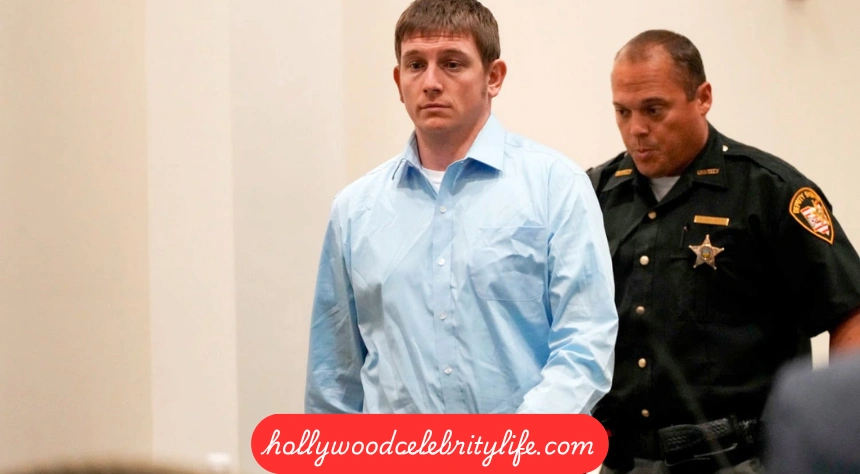
The direction of the case changed decisively on August 2, 2024. During a hearing in Clermont County Common Pleas Court, Chad Doerman abandoned the path toward a murder trial and pleaded guilty to three counts of aggravated murder and two counts of felonious assault. Each murder conviction corresponded to one of his sons. Under the negotiated resolution, the prosecution dismissed the specifications that could have resulted in a death sentence, as well as the other charges that were not part of the final plea. Judge Richard Ferenc accepted the agreement and proceeded to sentencing. Because Chad Doerman admitted guilt in court, the case no longer depended on prosecutors proving the murders to a jury, and the earlier suppressed interrogation was no longer the central evidentiary issue it would have been at trial.
Sentence: Three Consecutive Life Terms
After accepting the guilty pleas, Judge Ferenc sentenced Chad Doerman to three consecutive life sentences without the possibility of parole. He also received additional consecutive punishment connected to the two felonious-assault convictions. Reporting on the sentencing described an additional 16 years associated with those charges. The practical effect is straightforward: Doerman received a sentence intended to keep him incarcerated for the remainder of his life, without a future parole release date arising from the three murder sentences. The punishment ended the possibility of execution but did not provide any realistic path to release. Prosecutor Mark Tekulve emphasized following the plea that Doerman would remain in prison for life. He subsequently entered the Ohio Department of Rehabilitation and Correction system to begin serving the judgment.



Why Prosecutors Accepted the Plea Agreement
The removal of the death penalty did not mean prosecutors had reconsidered the seriousness of the crimes. Instead, Clermont County Prosecutor Mark Tekulve explained that the negotiated resolution guaranteed that Chad Doerman would spend his life in prison while avoiding additional suffering for surviving relatives. A capital prosecution can involve extensive pretrial hearings, a lengthy jury trial, sentencing proceedings, and years of appellate litigation. Doerman’s former wife supported the resolution, saying that the certainty of lifelong incarceration provided some finality to the legal process for her and her daughter. The plea also eliminated litigation risks surrounding evidentiary and mental-health questions. In that sense, the agreement exchanged the possibility of a death sentence for an immediate conviction and three consecutive life-without-parole sentences that did not require a traumatic trial.

What Is Known About Motive?
One of the most searched questions about Chad Doerman concerns why he killed his sons. Despite the extensive investigation, prosecutors publicly acknowledged after the case that a clear, satisfactory motive remained elusive. Investigators reconstructed his behavior, communications, searches, and actions around the time of the killings, and prosecutors said evidence indicated that the crime was intentional rather than an accidental event. However, identifying planning or disturbing behavior is different from proving a complete psychological explanation for why a person chose to commit an act. Because Chad Doerman pleaded guilty rather than proceeding through a full trial, no jury was required to evaluate competing theories about motive. Responsible reporting should therefore distinguish established evidence from theories and avoid presenting unsupported psychological diagnoses or internet speculation as proven fact.
Current Status and Public Record Through 2026
After sentencing, Chad Doerman entered Ohio’s state prison system in August 2024. Contemporary reporting documented his transfer from the Clermont County Jail to the Correctional Reception Center in Orient, Ohio, where newly sentenced prisoners undergo intake and classification before longer-term placement decisions. The controlling fact about his status is his sentence: three consecutive terms of life imprisonment without parole, plus the sentence for the felonious assaults. More recent 2026 coverage of the case continues to describe that plea and life sentence as the final criminal resolution. Public web results do not consistently provide a reliable, current permanent institution assignment, so claims about a specific present-day prison should be treated cautiously unless verified directly through Ohio Department of Rehabilitation and Correction records.
Conclusion
The biography of Chad Doerman is inseparable from the crime that brought his name into public view. On June 15, 2023, his sons Clayton, Hunter, and Chase were killed at their Ohio home, beginning a criminal prosecution that initially carried the possibility of the death penalty. The legal proceedings included a significant Miranda-rights ruling, an insanity plea, psychological evaluations, and arguments concerning serious mental illness. Ultimately, Chad Doerman chose to plead guilty on August 2, 2024, to three aggravated murders and two felonious assaults. He received three consecutive life-without-parole sentences and additional imprisonment. While public curiosity about motive remains strong, verified information does not provide a simple explanation. The clearest lasting facts are the convictions, the permanent prison sentence, and the loss experienced by the surviving family.
Frequently Asked Questions About Chad Doerman
What Did Chad Doerman Plead Guilty To?
Chad Doerman pleaded guilty on August 2, 2024, to three counts of aggravated murder and two counts of felonious assault. The aggravated-murder convictions concerned the deaths of his three sons, Clayton, Hunter, and Chase Doerman. The assault convictions related to surviving family members affected during the incident. Before the plea agreement, Chad Doerman had faced a much larger indictment containing 21 charges, including nine aggravated-murder counts, eight kidnapping charges, and four felonious-assault charges. Prosecutors agreed to resolve the case through the five guilty pleas and remove the aggravating specifications that could have produced a death sentence. The judge accepted the agreement and sentenced him immediately, bringing the main criminal prosecution to an end without a jury trial.
How Long Is Chad Doerman’s Prison Sentence?
Chad Doerman is serving three consecutive life sentences without the possibility of parole, meaning each aggravated-murder conviction resulted in a life-without-parole term and the sentences run one after another rather than concurrently. He also received additional consecutive prison time for his two felonious-assault convictions, reported as 16 years. Because the murder sentences carry no parole eligibility, the practical result is permanent imprisonment. Chad Doerman therefore does not have an ordinary parole date at which a board could decide to release him after completing a minimum portion of his murder sentence. The sentence was imposed by Clermont County Common Pleas Judge Richard Ferenc on August 2, 2024, immediately after Doerman formally entered his guilty pleas.
Did Chad Doerman Receive the Death Penalty?
No. Chad Doerman did not receive the death penalty, although prosecutors initially intended to pursue capital punishment. His original aggravated-murder charges included circumstances that could have made him eligible for execution if he had been convicted and the required legal findings had been made. During 2024, the defense also litigated whether serious-mental-illness provisions under Ohio law could make him ineligible for execution. That issue did not ultimately have to be fully resolved because prosecutors and the defense reached a plea agreement. In exchange for Chad Doerman pleading guilty to three aggravated murders and two assaults, the state removed the death-penalty specifications. He instead received three consecutive life-without-parole sentences, ensuring imprisonment for the rest of his life.
Why Was Chad Doerman’s Confession Suppressed?
The court suppressed statements from Chad Doerman’s custodial interrogation because Judge Richard Ferenc concluded that investigators violated his constitutional protections under Miranda. According to the ruling and reporting on the suppression hearing, the detective did not fully provide the required warning concerning an attorney before questioning. The court also determined that Chad Doerman had clearly invoked his right to counsel but questioning nevertheless continued. As a consequence, prosecutors were barred from introducing the affected interrogation statements in their case-in-chief at trial. Importantly, suppression did not erase the criminal charges or amount to a finding that Doerman had not committed the crimes. It simply limited the government’s ability to use evidence obtained through an interrogation that the court found constitutionally defective.
What Happened to Chad Doerman’s Sons?
Clayton Doerman, Hunter Doerman, and Chase Doerman, ages seven, four, and three, were killed on June 15, 2023, at their family’s home in Monroe Township, Ohio. Their father, Chad Doerman, later pleaded guilty to one aggravated-murder count for each child. During the 2024 sentencing proceedings, surviving relatives emphasized that the boys should be remembered for more than the crime committed against them. Their mother described the enormous loss created by their deaths and supported the plea arrangement because it guaranteed that Chad Doerman would remain imprisoned for life while allowing her family to avoid a prolonged capital trial. Her public statements also asked for privacy and encouraged people to remember the children themselves—their personalities, relationships, and ordinary childhood experiences—not solely the violence that ended their lives.